The Repair Shop Clause Your Auto Insurer Hopes You Never Read
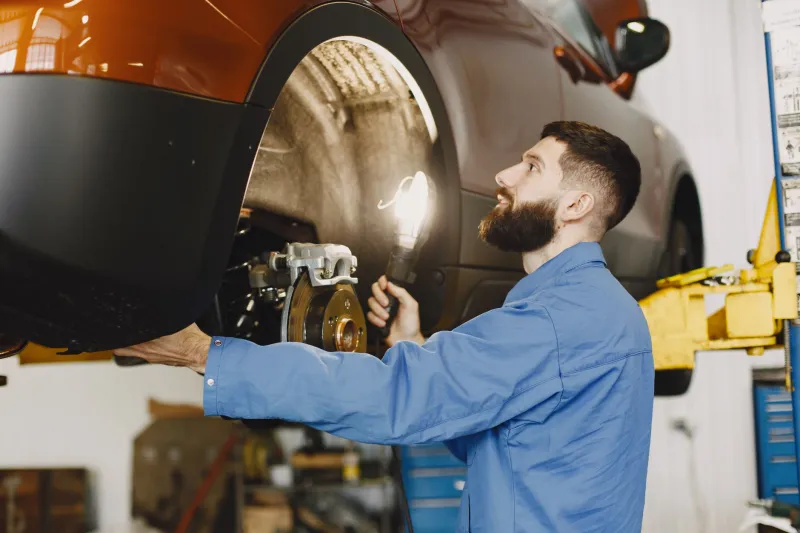
When you compare auto insurance quotes, the numbers on the screen appear straightforward: premium, deductible, coverage limits. What rarely appears in that initial comparison, however, is a clause that can determine where your car gets fixed, who touches it, and how much of the bill you ultimately absorb. That clause governs preferred repair networks—and for millions of American drivers, it quietly shapes the value of the coverage they think they are buying.
What a "Preferred Shop" Actually Means for Your Policy
Most major insurers maintain agreements with specific auto body shops and service centers across the country. These facilities, often branded under names like "Select Service," "Direct Repair Program," or similar proprietary labels, have negotiated labor rates, parts pricing, and turnaround timelines with the insurer in advance. From the carrier's perspective, this arrangement reduces claim costs and speeds up the repair cycle. From the driver's perspective, the implications are considerably more complicated.
When you receive a quote that appears competitively priced, there is a reasonable chance that pricing assumes you will use one of these in-network facilities if a claim ever arises. Insurers that operate robust preferred networks frequently offer lower premiums to offset what they frame as added convenience. The trade-off—which is rarely explained during the quoting process—is that steering your vehicle to an independent mechanic, a dealership service center, or any facility outside that network may result in a coverage gap, a supplemental inspection requirement, or an outright reduction in what the insurer will pay.
How Network Restrictions Are Priced Into Your Quote
The connection between shop restrictions and quote pricing is not accidental. Insurers use actuarial data to estimate the average cost of a claim when repairs are performed within their network versus outside it. Because preferred shops agree to standardized labor rates—often below what an independent facility charges—the insurer's projected claim payout is lower. That projected savings is factored into the premium you see at the comparison stage.
In practical terms, this means two quotes for identical coverage levels from two different insurers may reflect entirely different assumptions about where your car will be repaired. The lower quote may be lower precisely because the insurer has built in the expectation that you will use their network. If you later choose an independent shop—perhaps one you have trusted for years or one that specializes in your vehicle's make—you may find that the insurer's reimbursement falls short of the actual invoice, leaving you to cover the difference.
Some policies address this through a "betterment" clause or by limiting labor rate reimbursements to what the insurer deems "reasonable and customary" for your region. These determinations are made internally, and they do not always align with what local independent shops actually charge.
The Quality Question That Quotes Don't Address
Beyond cost, there is a repair quality dimension that standard insurance quotes never capture. Preferred network shops operate under volume agreements with insurers, which creates financial incentives to complete repairs quickly. Speed and quality do not always align, particularly for complex structural damage, frame work, or advanced driver assistance system (ADAS) recalibration—a growing concern as modern vehicles become increasingly sensor-dependent.
Dealership service centers, by contrast, are often factory-authorized to perform manufacturer-certified repairs and have direct access to original equipment manufacturer (OEM) parts. For vehicles still under warranty, using a non-authorized facility for collision repairs can, in some cases, complicate warranty claims on affected components. This is a nuance that no comparison platform will surface in a standard quote summary, yet it carries real financial consequences for drivers who own newer or higher-value vehicles.
Independent shops, meanwhile, may offer superior craftsmanship and more personalized service, particularly for specialty vehicles or older models where shop familiarity matters. The restriction embedded in a preferred-network policy effectively penalizes drivers who have legitimate reasons to choose these alternatives.
Reading the Policy Language Before You Commit
The most effective way to avoid this issue is to examine the policy document—not just the quote summary—before purchasing coverage. Look specifically for language related to:
- Direct Repair Programs (DRP): Language indicating the insurer has a network of approved facilities.
- Labor rate caps: Any provision that limits reimbursement to a specific dollar amount per hour, regardless of the shop's actual rate.
- Parts sourcing provisions: Clauses that permit the insurer to authorize aftermarket or recycled parts rather than OEM components.
- Inspection requirements: Conditions requiring the insurer to inspect the vehicle before repairs begin, which can delay the process if you are not using a preferred location.
If any of these provisions appear, ask the insurer directly whether you are required to use a preferred shop or simply encouraged to do so. The distinction matters. Some policies frame network use as optional while still reimbursing at a reduced rate for out-of-network repairs—a meaningful but easily overlooked difference.
Negotiating Coverage at Your Chosen Facility
Drivers who prefer a specific repair shop are not without options, though exercising those options requires preparation. When comparing quotes, consider raising the following questions with each insurer:
Does the policy guarantee payment of the actual repair invoice, or is reimbursement capped at the preferred shop rate? Some carriers, particularly those offering higher-tier or OEM-certified coverage endorsements, will agree to pay the full cost of repairs at any licensed facility. This endorsement typically adds to the premium but eliminates the coverage gap.
Is there an OEM parts guarantee available? Several insurers offer this as an add-on, ensuring that replacement components come from the original manufacturer rather than aftermarket suppliers. For newer vehicles, this can protect both safety performance and resale value.
What is the appeals process if a reimbursement falls short? Understanding the dispute resolution mechanism before a claim occurs puts you in a stronger negotiating position afterward.
For drivers who already have a trusted repair relationship—whether with a local independent shop or a dealership—these questions should be standard components of any quote comparison, not afterthoughts.
What This Means When You Compare Quotes
At List of Car Quotes, the goal of any comparison is to surface not just the price difference between policies, but the coverage difference. A quote that appears $200 cheaper annually may represent a net loss if a single claim results in a $400 shortfall because your preferred shop falls outside the insurer's network. That arithmetic rarely appears in a side-by-side quote comparison—which is precisely why drivers need to ask for it.
As you evaluate coverage options, treat the repair shop question as a core feature of the policy, not a footnote. The insurer that gives you the most flexibility in choosing where your vehicle is repaired may ultimately deliver more value than the one offering the lowest initial premium. Understanding the difference, before you need to file a claim, is what separates a well-structured policy from one that looks complete until the moment it matters most.